
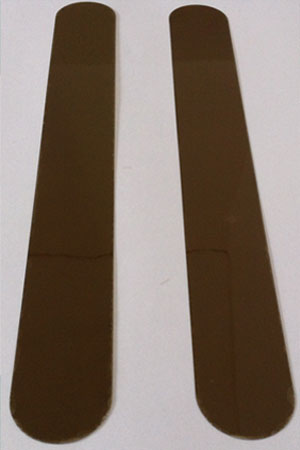
Steam boilers and process vessels rely on level gauges that operators can read clearly and safely. Natural mica has long been used in these gauges, because it stays stable under heat and pressure while remaining transparent. This guide is for manufacturers and distributors of level gauges, gauge glass and boiler fittings who need a dependable supply of mica sheets and discs.
Why mica is used in level gauges
Mica is unaffected by high temperature and high pressure, which makes it an ideal optical medium for checking liquid level and steam conditions in boilers. In many reflex and transparent gauge designs, a thin mica shield sits between the glass and the medium. The mica protects the glass from attack by high-temperature water and steam, helping it stay readable for longer.
Mica's natural properties support this role: it cleaves into thin, flexible, transparent sheets, has very low moisture absorption and is chemically stable in most service conditions (it is affected by hydrofluoric acid).
Discs, sheets or custom shapes?
PNR supplies cut mica discs, die-cut or lathe-cut, for liquid level indicators, as well as sheets and parts cut to customer drawings. Typical formats buyers ask for:
- Round discs for circular sight glasses and tubular indicators.
- Rectangular sheets / gaskets-shape pieces for flat reflex and transparent gauges.
- Custom shapes matched to your glass and gasket dimensions.
Explore our fabricated mica range.
Choosing the right mica quality
For gauge applications, optical clarity matters more than in most other uses. When you specify quality, consider:
- Clarity – clear material is generally preferred for sight applications; stains and spots can reduce readability.
- Flatness – flat, even sheets seal better against glass and gaskets.
- Thickness – state the thickness or thickness range used in your design. Thin, uniform sheets are typical; several layers may be stacked depending on design.
- Freedom from defects – cracks, air inclusions and edge damage should be specified as unacceptable.
PNR works with natural muscovite mica from its own mine in Jharkhand. Tell us your gauge type and service conditions so we can suggest a suitable grade; the pressure and temperature rating of the complete gauge must always be confirmed by the gauge manufacturer.
Mica properties that matter in gauge service
PNR's published reference values for muscovite mica help explain why it suits this application:
- Very low moisture absorption – important for a material in constant contact with water and steam.
- Transparent to translucent diaphaneity – natural mica sheets let operators see the level clearly when the right quality is selected.
- Perfect basal cleavage – mica splits into thin, uniform layers, so sheets can be prepared to the thickness your design requires.
- Chemical stability – muscovite is affected by hydrofluoric acid, so share details of the medium if your gauge is used outside water and steam service.
These are mineral reference values. The performance of a finished gauge depends on its design, glass, gaskets and operating conditions, which is why we always ask for your application details.
Muscovite or phlogopite?
Most gauge mica is muscovite. PNR's published reference values list a maximum operating temperature of 500–600 °C for muscovite mineral, while phlogopite can withstand higher temperatures. Compare them in our muscovite vs phlogopite guide.
How to request a quotation for gauge mica
Include the following to receive an accurate offer:
1. Drawing or dimensions – diameter (discs) or length × width (sheets), and tolerance.
2. Thickness – nominal and allowed range.
3. Quality – clear / slightly stained; any visual acceptance criteria.
4. Gauge type – reflex, transparent or tubular; boiler or process service.
5. Quantity – sample lot and regular monthly/annual quantity.
6. Packing – interleaving, cartons, labelling requirements.
7. Destination – port or city and Incoterm.
Our RFQ checklist for fabricated mica parts covers these points in more detail.
Working with PNR
Prime Natural Resources owns and operates a muscovite mica mine in the Dhodakola area of Jharkhand and has an in-house processing unit at Jhumri Telaiya, Koderma. Mica is selected and graded before it is cut and punched, so we can match the material to the job rather than cutting from whatever is on hand. For gauge buyers this means:
- Material selection from source – clear, flat material can be chosen for sight applications.
- Cutting to drawing – discs and shapes made to your dimensions instead of a fixed catalogue.
- Photos and samples – available on request so you can check quality before placing a regular order.
- Consistent repeat supply – share your expected annual volume and we can plan material for repeat lots.
Learn more about PNR or browse the applications we serve.
Packaging and delivery
Fabricated mica is normally shipped in cardboard or wooden boxes. International sea shipments go from Kolkata Port; smaller or urgent orders can be sent by air cargo or courier. See packaging & shipment.
Frequently asked questions
What does mica do in a boiler gauge glass?
It acts as a transparent shield that protects the glass from high-temperature water and steam while keeping the level visible.
Can you cut mica discs to our drawing?
Yes. PNR supplies die-cut and lathe-cut discs and can cut to customer drawings.
Which mica quality is best for level indicators?
Clear, flat muscovite mica is typically preferred. Share your design and we will suggest suitable material.
Can we get samples?
Ask for samples with your enquiry and include the drawing and thickness so the samples match your design.
Do you export to Europe and Southeast Asia?
Yes, PNR supplies domestic and international customers, with sea shipments from Kolkata and courier options for urgent orders.
Get a quote for gauge mica
Send your drawing, thickness, quality and quantity, and our team will reply with an offer.
Email: mica@pnrmica.in · Phone/WhatsApp: +91 82941 54582 · Make an enquiry