
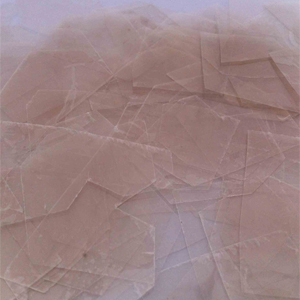
Every sheet of micanite, every roll of mica tape and every commutator segment starts the same way: as thousands of very thin mica layers called splittings. For micanite fabricators, mica tape makers and motor and generator insulation suppliers, splittings are the core raw material, and buying them well is mostly about describing them clearly.
This guide explains what mica splittings are, how bookform and loose splittings differ, how they turn into finished insulation, and what to include in an enquiry to Prime Natural Resources (PNR).
What are mica splittings?
At PNR, natural mica is sorted by size and thickness. Pieces of medium-quality mica with a thickness of less than 1 mil are classified as mica splittings. They are split by hand from larger mica pieces, which is why the Koderma–Jhumri Telaiya region, with its long mica-working tradition, remains a key source.
Splittings sit at the thin end of PNR's processed mica range:
- Mica blocks: over 1 sq inch in area and 7 mils or more thick.
- Mica thins: 2 to 7 mils, used for fabricated parts.
- Condenser films: high-quality mica, generally under 2 mils, for capacitor plates.
- Splittings: medium-quality mica under 1 mil, for micanite products.
If you are buying thicker material to punch or cut, our mica block buying guide is the better starting point.
Bookform vs loose splittings
PNR supplies splittings in two forms.
Bookform splittings are kept together in small stacks, like the pages of a book, after splitting. Keeping the layers together helps protect thin pieces and keeps the lot easier to handle and inspect.
Loose splittings are supplied as individual pieces, packed loose in cases. They suit processes that lay up splittings mechanically or by hand across a large sheet area.
Which form you need usually depends on how your plant lays up micanite or tape, and on what your process is set up for. If you are switching suppliers, tell us which form you use today.
How splittings become finished insulation
Splittings are laid up in layers and bonded with a binder to make micanite. PNR describes binders such as shellac, epoxy, alkyd and silicone, chosen to give the finished sheet particular characteristics. Typical products made from splittings include:
- Moulding micanite: clear splittings with a modified shellac bond, flexible when warmed and rigid once set. Used for commutator vee-rings, end caps and tubes.
- Heat-resisting micanite: high-quality splittings with a low shellac bond, in muscovite and phlogopite versions, for domestic and industrial heating.
- Flexible micanite: clear splittings bonded, with or without reinforcement, for wrapping without heating.
- Punched segment mica: muscovite splittings pasted with a small amount of alkyd varnish, processed at high temperature and pressure, then ground, for commutator segments.
- Mica tubes: rolled from micanite made with specially selected splittings, so that even small-diameter tubes can be formed.
Mica tape for motor and generator windings follows the same principle: splittings or mica paper bonded onto a backing such as glass cloth or film. If you make mica paper rather than tape from splittings, see our scrap, flakes and powder guide for the scrap grades that feed paper mills.
For help choosing the finished sheet itself, read our guide to choosing micanite sheet.
Muscovite or phlogopite splittings?
Most splittings are muscovite. PNR's published maximum operating temperature references are 500–600 °C for muscovite and 800–900 °C for phlogopite, and PNR mostly uses Madagascar-origin phlogopite. Remember these are mineral references; the rating of the finished micanite or tape depends on the binder and construction. See muscovite vs phlogopite.
What to include in your splittings RFQ
Splittings are traded on visual quality and size, so a precise enquiry matters:
1. Form: bookform or loose.
2. Mica type and colour: muscovite (ruby or green) or phlogopite.
3. Size grade: the grade number you buy today, or minimum piece size.
4. Thickness: your required range.
5. Quality: cleanliness and acceptable stains or spots; first or second quality if you grade that way.
6. End product: micanite sheet, mica tape, commutator segments, tubes or heater plates.
7. Quantity: trial lot and expected monthly or annual tonnage.
8. Destination and Incoterm: for example FOB Kolkata or CIF your port.
A small sample or photos of the splittings you currently use help us match your existing material.
Packing and shipping
PNR packs bookform splittings in cardboard or wooden boxes of 16.25 × 16.25 × 10 inches, and grade No. 6 loose splittings in wooden cases of 22 × 16 × 10 inches. Sea shipments leave from Kolkata Port, with air cargo or courier for urgent lots. See packaging & shipment.
Frequently asked questions
How thin are mica splittings?
PNR classifies medium-quality mica under 1 mil thick as splittings.
What is the difference between bookform and loose splittings?
Bookform keeps split layers together in small stacks; loose splittings are packed as individual pieces. Choose the form that matches your lay-up process.
Do you supply phlogopite splittings?
PNR supplies phlogopite mica, mostly of Madagascar origin. Ask about current availability for your grade.
Can I get samples before a bulk order?
Yes. Tell us your form, grade and end use, and we can arrange photos or a sample of the current lot.
Request a splittings offer
Share your form, grade, quality, quantity and destination port, and our team will come back with availability and an offer.
Email: mica@pnrmica.in · Phone/WhatsApp: +91 82941 54582 · Make an enquiry